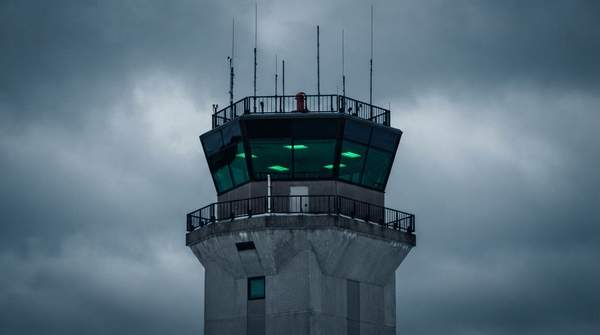
AI-induced deskilling is a real, documented risk. And aviation has already run the experiment for us. The FAA's own advisory work on Information Automation systems found that automating functions previously performed by pilots "may result in skill degradation, lack of engagement, and lack of understanding." Aviation's answer was not to abandon automation. It was to build systems that keep humans proficient. Here is how any professional can borrow that playbook.
The Challenge of AI-Induced Deskilling
Here is the uncomfortable pattern. The more capable the automation, the less the human practices the underlying skill. The less they practice, the less they can intervene when the automation fails.
A peer-reviewed analysis in Artificial Intelligence Review, led by Chiara Natali and Federico Cabitza, frames this as a governance problem, not just a personal one: preventing AI-induced deskilling in high-expertise domains requires "thoughtful design and robust governance." Individual willpower is not the fix. Environment and incentives are.
That is why aviation is the right teacher. It has decades of operational data on what automation does to human expertise — and regulators have responded with concrete countermeasures.
Aviation's Proactive Approach to Automation: Lessons for AI
Aviation did not discover skill decay recently. EASA's 2013 automation policy, responding alongside the FAA's SAFO 13002, laid out a structured process: identify crew-automation interaction challenges, bridge design and training principles, prioritize issues, and assess risk mitigations in regulatory provisions.
Notice what is missing from that list: panic. No one proposed removing autopilots. Instead, aviation treated automation-induced skill decay as a predictable, manageable hazard — the same way it treats turbulence or engine failure.
That framing is the single most transferable lesson. Skill decay is not a surprise or a moral failing. It is a known systems risk with known countermeasures.
The Cockpit Model for Skill Preservation
Below is a decision matrix I call the Cockpit Model. It works in two moves. First, categorize a professional task by how susceptible it is to AI-induced erosion. Second, map it to the aviation principle that addresses that susceptibility. The result is a clear choice of mitigation strategy for each skill you want to protect.
| Task profile | Deskilling risk | Aviation principle | Your mitigation strategy |
|---|---|---|---|
| Core skill AI can fully perform; you rarely exercise it unaided | High — proficiency fades without use | Pilots encouraged to fly manually on routine flights when workload is low | Mandated manual practice: schedule minimum unaided work sessions |
| Task where you must take over when AI performs poorly or fails | High — you must stay intervention-capable | Recurrent simulator training exposes pilots to maneuvers requiring improvement | Failure scenario training: rehearse AI breakdowns and handoffs deliberately |
| AI-assisted judgment calls with real consequences | Medium — risk is misplaced trust and disengagement | Regulators monitor deviations from consolidated average flight precision via SMS and FDM | Human-in-the-loop oversight: keep authority, monitor deviation patterns, adjust policy |
| Low-stakes tasks AI handles reliably | Low — acceptable to delegate | Aviation still automates routine functions; the risk is managed, not eliminated | Delegate, but audit occasionally for drift |
The matrix is a translation, not a copy. Aviation's evidence supports the underlying principles; applying them to your profession requires judgment about which tasks carry real consequence when AI errs.
Principle 1: Mandated Manual Practice
The clearest aviation lesson comes from clinical AI researchers writing in npj Digital Medicine: "skill decay secondary to automation is predictable and reversible, but only if this is actively addressed." Pilots are encouraged to fly manually on routine flights when workload is low or weather is good.
The key word is actively. Passive exposure does not count. The authors propose "minimum unaided practice without AI support" for clinicians as AI becomes routine.
For you, that means scheduling protected hours where you do the work the old way. Write the analysis without the assistant. Read the primary source, not the summary. Treat it like a gym appointment for your expertise — because that is exactly what it is.
Principle 2: Training for Failure Scenarios
Aviation's recurrent simulator training exists partly because skills fade invisibly. As FlightSafety International puts it, "Experiencing a maneuver that requires improvement during recurrent training is to be expected, as this helps pilots reach and maintain peak proficiency."
Translate that to AI work. Run deliberate failure drills. Take a completed AI-assisted output, remove the AI, and redo it yourself under time pressure. Practice the handoff: what do you check first when the model's answer looks wrong?
To be precise, the aviation evidence documents simulator training for maneuvers requiring improvement generally — not drills against AI failures specifically. The failure-scenario application is my translation of that structure to AI contexts. It is a reasoning move, not a documented aviation protocol.
Principle 3: Human-in-the-Loop Oversight
The third principle comes straight from the regulator. The FAA's roadmap for AI safety assurance exists because learning systems break the traditional engineering model: AI achieves performance "by learning rather than design," without the engineering principles that guided traditional development.
The practical consequence for professionals: you cannot assume you understand what your AI tool will do. So build the oversight in. Keep final authority over consequential decisions. Monitor patterns of deviation, the way EASA's policy uses safety management and flight data monitoring to track deviations from average flight precision and "adjust policies accordingly."
Oversight is not a personality trait. It is a designed process with named owners and defined thresholds.
Organizational and Regulatory Governance for Skill Preservation
Individual strategies fail without systemic support. Aviation's countermeasures live in regulation, operator training programs, and monitored data — not in pilot goodwill.
Other industries face a genuine gap here. The FAA's roadmap is blunt: "existing software and complex hardware guidance is not adequate to address learned AI implementations," because traceability cannot explain the internal dynamics of a system developed through data. Resolving this "will necessitate new assurance methods." A Berkeley CLTC report on aviation and AI safety similarly notes that technical safety standards for AI are in early development, with standard-setting bodies so far focused on less safety-critical uses.
So what should organizations do now? Three things. Build training regimes that assume AI failure. Set policies that mandate unaided practice for critical skills. And push for assurance frameworks that fit learning systems — because, as EASA notes, AI brings complexity, ethical and cybersecurity challenges that current structures were not built for.
Sustaining Expertise in the Age of AI
My position: professionals and organizations should actively implement aviation-derived strategies to preserve human expertise, focusing on continuous skill maintenance, failure preparedness, and human oversight in AI-integrated workflows.
How do you know it is working? Regular audits show a documented increase in targeted training programs for at-risk skills and clear protocols for human intervention in AI-driven processes. That is the measurable standard. Aviation did not preserve pilot expertise through sentiment — it did it through monitored data, mandated training, and explicit intervention protocols. Your field can do the same, starting with one honest inventory of which skills you can no longer perform unaided.
Sources
- FAA: Information Automation systems
- AI-induced Deskilling in Medicine — SpringerLink
- EASA: EASA's 2013 automation policy
- Flight rules for clinical AI: lessons from aviation for human-AI collaboration in medicine - npj Digital Medicine — Nature
- Lost Skills - Flight Safety Foundation
- FAA: FAA's roadmap for AI safety
- Artificial Intelligence and Aviation — EASA
- The Flight to Safety-Critical AI: Lessons in AI Safety from the Aviation Industry - CLTC