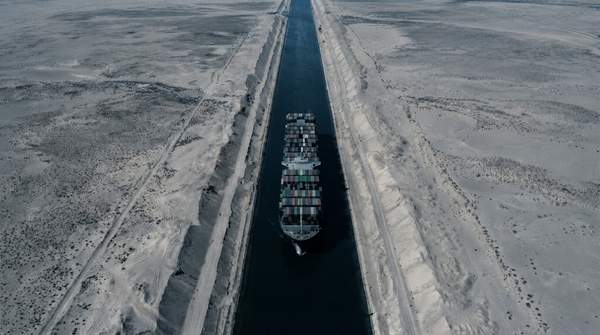
The world's four most consequential maritime chokepoints do not fail in the same way, and that difference matters for anyone planning trade routes. The Panama Canal's dominant threat is climate-driven drought, while the Suez Canal and Red Sea have been disrupted by geopolitical conflict that pushed vessels onto longer Cape of Good Hope routings. The Strait of Hormuz and the Strait of Malacca, by contrast, carry heightened geopolitical risk in the view of the UN trade body, though the public evidence for those two corridors is more general than for the other two. Understanding which threat dominates which corridor is the first step in judging where a supply chain is actually exposed.
Navigating Global Trade's Chokepoints: A Risk Comparison
UNCTAD's Review of Maritime Transport 2024 frames the problem directly: three chokepoints—the Panama Canal, the Red Sea and the Suez Canal—faced new challenges in 2023 and 2024, while recent geopolitical tensions have heightened the risk of disruption at other key chokepoints, specifically naming the Strait of Hormuz and the Strait of Malacca. The report treats these corridors as pressure points for global trade flows rather than isolated local problems, because a single blockage forces rerouting across entire trade networks. A 2025 scholarly analysis in Lex Localis by Soorya Soman and P. Balasubramanian similarly examines geopolitical risks and strategic adaptations for primary chokepoints, reinforcing that these corridors are now treated as standing strategic vulnerabilities rather than occasional bottlenecks.