When a rock chip becomes a sprawling crack, understanding the replacement process is crucial for ensuring your vehicle's safety and integrity. The procedure involves more than just swapping out a pane of glass. It's a technical service that interacts with your car's structural and electronic systems. This guide breaks down how Auto Glass Force's auto glass replacement works, detailing the essential parts and materials that define a quality installation.
For any vehicle owner, knowing what goes into a replacement empowers you to make informed decisions about your car's maintenance and safety.
Understanding Auto Glass Mechanics and Materials
Before diving into the replacement process, it's important to recognize that not all auto glass is the same. The glass in your vehicle is a critical safety component, engineered for specific functions depending on its location. The industry primarily uses two types: laminated and tempered glass. Laminated glass, used for windshields, consists of a vinyl layer sandwiched between two sheets of glass.
This construction prevents it from shattering into dangerous shards upon impact, instead holding the broken pieces together. Sidelites, backlites, and sunroofs are typically made from tempered glass, which is heat-treated to be much stronger than standard glass. When it does break, it shatters into small, relatively harmless pebble-like pieces.
The distinction between these materials is fundamental to the auto glass replacement process. According to a report from Grandview Research, tempered glass accounted for over 50% of the revenue share in the automotive aftermarket glass market in 2025, highlighting its widespread use.
Auto Glass Force's approach begins with identifying the correct type of glass required for the specific application on your vehicle, ensuring that the replacement part meets or exceeds original equipment manufacturer (OEM) standards for safety and performance.
How Glass Engineering and ADAS Integration Shape Replacements
The modern auto glass replacement process is a multi-step procedure that requires precision and technical expertise, especially with the integration of advanced driver-assistance systems (ADAS).
Auto Glass Force follows a systematic approach to ensure every component functions correctly post-installation:
- Initial Vehicle Inspection and Damage Assessment
- Sourcing the Correct OEM-Equivalent Glass
- Careful Removal of Damaged Glass and Trim
- Preparing the Vehicle Frame and Applying Adhesive
- Setting and Sealing the New Glass
- ADAS Camera and Sensor Recalibration
Initial Vehicle Inspection and Damage Assessment
The first step in any professional auto glass replacement is a thorough inspection. A technician from Auto Glass Force examines the extent of the damage to determine if a repair is possible or if a full replacement is necessary. This assessment also involves identifying the vehicle's specific features, such as rain sensors, heating elements, or forward-facing cameras linked to ADAS features like lane-keeping assist and automatic emergency braking.
This initial diagnosis is critical because it dictates the exact type of glass and the subsequent procedures, like sensor recalibration, that will be required to restore the vehicle to its factory specifications.
Sourcing the Correct OEM-Equivalent Glass
Once the assessment is complete, the next part of the process is sourcing the correct glass. This is more complex than it sounds. According to Mordor Intelligence, windshields captured a significant portion of the automotive glass market, and their complexity is growing. Modern windshields are often multi-functional assemblies that can include embedded antennas, head-up-display (HUD) reflectors, and infrared-filtering coatings.
Auto Glass Force ensures the replacement glass matches the original's specifications precisely. Using an OEM-equivalent part is vital for a proper fit, clear optics, and, most importantly, the correct functioning of any integrated technology. A mismatch can lead to wind noise, water leaks, or ADAS malfunctions.
Careful Removal of Damaged Glass and Trim
With the correct replacement glass on hand, the technician begins the removal process. This step requires meticulous care to avoid damaging the vehicle's paint or bonding surface, known as the pinch weld. Specialized tools are used to cut through the old urethane adhesive that holds the glass in place. Any surrounding trim, moldings, and components like windshield wipers and rearview mirrors are carefully removed and set aside.
Auto Glass Force technicians are trained to perform this extraction cleanly, preserving the integrity of the vehicle's frame, which is essential for the new glass to bond correctly and provide structural support.
Preparing the Vehicle Frame and Applying Adhesive
After the old glass is removed, the vehicle's frame must be prepared for the new installation. The technician removes the majority of the old urethane adhesive, leaving a small, flat base layer to ensure a strong bond with the new adhesive. The pinch weld area is then cleaned and primed. This primer promotes adhesion and helps prevent rust from forming on any small scratches that may have occurred during the removal process.
A new bead of high-quality urethane adhesive is then applied evenly to the frame. The type and application of this adhesive are critical parts of the replacement, as it forms the seal that keeps out water and wind while also contributing to the vehicle's structural rigidity.
Setting and Sealing the New Glass
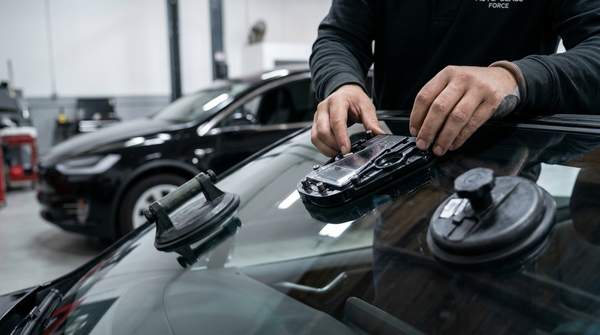
This is the moment of truth in the auto glass replacement. Using specialized suction cups, the technician carefully places the new windshield or window onto the urethane bead. The glass is precisely positioned to ensure an even seal and proper alignment with the vehicle's body. Once set, gentle pressure is applied to ensure the glass makes full contact with the adhesive.
Any trim, moldings, and other components that were removed are then reinstalled. The urethane adhesive requires time to cure, and Auto Glass Force provides customers with a safe drive-away time, which is the minimum time required for the adhesive to be strong enough to meet federal motor vehicle safety standards.
ADAS Camera and Sensor Recalibration
For most modern vehicles, the job isn't finished once the glass is set. If the windshield was replaced, any cameras or sensors attached to it must be recalibrated. This is a non-negotiable step, as even a minuscule change in camera angle can cause ADAS features to fail, compromising safety.
Auto Glass Force addresses this by performing either a static recalibration (in a controlled environment using specific targets) or a dynamic recalibration (by driving the vehicle under specific conditions), or both, depending on the manufacturer's requirements. This final step ensures that safety systems like lane departure warnings and collision avoidance are functioning as intended with the new glass installation.
Precision Fitting Across Every Make and Model
A significant part of a successful auto glass replacement hinges on the technician's ability to work with a diverse range of vehicles. Auto Glass Force states that its services are available for all vehicle makes and models, a claim that underscores the importance of expertise and access to a wide inventory of parts.
Whether it's a domestic sedan for a family in Hayward or a European luxury SUV with complex sensor arrays, the fundamental process remains the same, but the specifics can vary dramatically. The shape of the glass, the type of molding, and the ADAS technology all differ.
A quality replacement accounts for these variables, ensuring that every installation is tailored to the vehicle's unique design for a perfect, factory-like fit that maintains both aesthetic appeal and structural integrity.
Navigating Sensor Alignment and Custom Glass Vulnerabilities
The increasing sophistication of automotive glass presents unique challenges during replacement. Technicians must navigate the complexities of multi-functional glass that may have embedded antennas or special coatings for infrared filtering. The most critical hurdle is often the precise alignment and recalibration of ADAS sensors. A slight misalignment can render safety features inaccurate or inoperable.
Another common obstacle is dealing with non-standard or custom glass, which may require special ordering and handling procedures.
The approach taken by Auto Glass Force involves a deep understanding of these advanced systems. By staying current with evolving automotive technology and following manufacturer-specified procedures, technicians can overcome these vulnerabilities and ensure that even the most advanced vehicles receive a replacement that restores full functionality and safety.
Mastering the Craft: Why Precision Glass Replacement Protects What Matters Most
Understanding the intricate science behind auto glass replacement transforms a routine service into a vital safeguard for your journey. A true high-caliber restoration hinges on uncompromised standards: OEM-equivalent glass, laboratory-grade adhesive application, and flawless ADAS recalibration. This is precisely where industry leaders like Auto Glass Force excel, bridging cutting-edge technological precision with an uncompromising commitment to structural integrity.
When precision engineering meets expert execution, your windshield becomes far more than clear glass—it becomes an invisible shield, silently protecting every life behind it.
Curious About Auto Glass? Clear Answers to Essential Safety Questions
What's the difference between laminated and tempered auto glass?
At Auto Glass Force, laminated glass is used for windshield replacements as a sandwich of two glass layers with a plastic interlayer holding them upon impact. Tempered glass, used for side and rear windows, is heat-treated for strength and shatters into small, blunt pieces to reduce injury risk.
Does Auto Glass Force handle ADAS recalibration after a windshield replacement?
Yes, recalibrating the cameras and sensors associated with your vehicle's Advanced Driver-Assistance Systems (ADAS) is a critical final step in the windshield replacement process.
Auto Glass Force ensures that these safety systems are restored to manufacturer specifications to function correctly after the new glass is installed.
Does Auto Glass Force offer other services besides glass replacement?
In addition to its comprehensive auto glass replacement and repair services, Auto Glass Force also provides window tinting services. This allows vehicle owners to address multiple glass-related needs, from safety and structural repairs to aesthetic upgrades and UV protection, with a single provider.