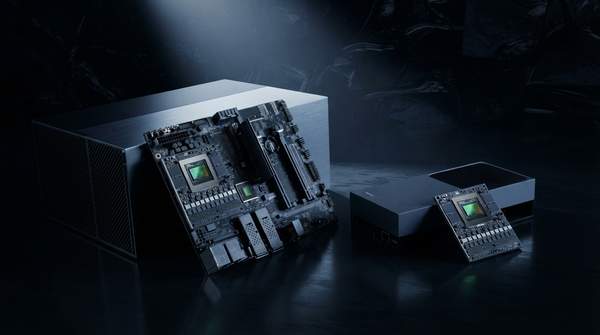
Elon Musk is set to present SpaceX's Terafab chip project, estimated to cost $25 billion and aiming for 100 to 200 billion custom AI chips annually, directly to ASML employees in a closed-door virtual event. Elon Musk's direct engagement with ASML employees underscores advanced hardware's pivotal role in AI's future, its sheer scale poised to redefine chip production strategies for major tech players.
While public discourse often fixates on AI software and models, the critical leverage point for future AI dominance increasingly shifts to control over advanced hardware manufacturing. Proprietary chip design and production are now recognized as essential for competitive advantage.
Companies like Tesla and SpaceX are likely to pursue aggressive vertical integration strategies to secure their AI chip supply, potentially reshaping the semiconductor landscape. The aggressive vertical integration strategy bypasses traditional foundries, establishing direct control over production.
Musk's Direct Engagement with ASML
Elon Musk will virtually present SpaceX's Terafab chip project, estimated at $25 billion, directly to ASML employees during a closed-door technology conference, including a fireside chat with ASML CEO Christophe Fouquet. Elon Musk's direct, private engagement for a multi-billion dollar initiative signifies a critical, personalized negotiation with ASML, moving beyond mere public announcements. It reveals the strategic depth of Musk's approach to securing essential hardware partnerships.
The Unprecedented Scale of Terafab
The Tesla Terafab targets an astonishing 100 to 200 billion custom AI chips annually. The Tesla Terafab's production goal of 100 to 200 billion custom AI chips annually represents a radical shift towards in-house manufacturing, an unprecedented output designed to meet the immense demands of Musk's ventures, from autonomous vehicles to spacecraft. Such a massive custom chip effort could fundamentally reshape the global AI hardware landscape.
ASML: The Global Chokepoint
ASML maintains a critical, near-monopolistic position in the advanced semiconductor equipment market. Its unique extreme ultraviolet (EUV) lithography machines are indispensable for producing the most advanced chips. ASML's critical, near-monopolistic position and its unique extreme ultraviolet (EUV) lithography machines make it an essential partner for any major chip initiative, including Terafab; its technology is a global chokepoint in advanced chip production.