Multinational corporations face the complex challenge of fortifying their supply chains against an array of disruptions while simultaneously managing cost efficiency. Implementing resilience strategies inherently involves trade-offs with cost, and their effectiveness in mitigating geopolitical risks can vary significantly. This necessitates a structured approach to evaluating and selecting strategies that achieve an optimal balance between robustness and economic viability.
The pursuit of resilience is not a myopic concept detached from practical implementation; rather, it requires aligning resources, competencies, and capabilities to make informed decisions, as research from the University of Cambridge suggests. Understanding the specific impacts of strategies like multi-sourcing, strategic inventory buffering, and enhanced visibility on capital expenditure, operational flexibility, lead times, and geopolitical risk mitigation is crucial for corporations aiming to build proactive resilience in uncertain environments.
The Evolving Landscape of Supply Chain Risks
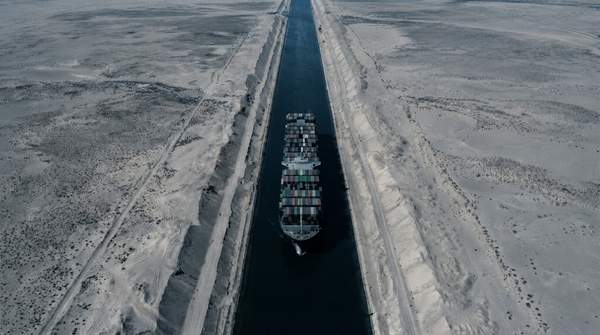
The global supply chain landscape is increasingly volatile, driven by a confluence of factors including geopolitical tensions, trade restrictions, and climate change. Events such as the COVID-19 pandemic, the Suez Canal blockage, and ongoing geopolitical conflicts have underscored the fragility of traditionally cost-optimized supply chains. These disruptions highlight the critical need for multinational corporations to develop robust risk-mitigation strategies that enhance overall supply chain effectiveness.
Companies must embed climate-related risk into their supply chain scorecards, recognizing that extreme weather and rising sea levels are pressing concerns, particularly in sectors with concentrated production in regions like East Asia, according to a BCG Global report. In contrast, sectors largely based in the West, such as medtech, may have more time to design and implement mitigation measures. This evolving risk environment necessitates an integrated approach, combining empirical and theoretical studies to design contracts and foster better coordination across the entire supply chain, as noted by I by IMD.
Balancing Resilience and Cost: An Inherent Trade-off
The fundamental challenge for multinational corporations lies in achieving both supply chain resilience and cost efficiency, as these objectives often present an inherent trade-off. Decisions made to optimize for cost and efficiency can inadvertently compromise a supply chain's ability to withstand and recover from disruptions, and vice-versa. This paradox means that a singular focus on either extreme—maximum resilience at any cost or absolute efficiency regardless of risk—is rarely sustainable or practical.
Academic research on supply chain resilience (SCRES) emphasizes that without considering cost, resilience remains a myopic concept detached from practical implementation, according to a study published by the University of Cambridge. This perspective highlights the necessity for organizations to link the maturity level of their SCRES to their available resources, competencies, and capabilities. Such an integrated approach assists organizations in making informed decisions to build proactive resilience within uncertain environments, ensuring that investments in robustness are strategically aligned with financial realities.
Supply Chain Resilience Strategies: Trade-offs and Impacts
Multinational corporations can use this table to quickly compare the typical impacts of key resilience strategies on cost, operations, and risk mitigation, aiding in strategic decision-making.
| Strategy Type | Impact on Capital Expenditure | Impact on Operational Flexibility | Impact on Lead Times | Geopolitical Risk Mitigation |
|---|---|---|---|---|
| Multi-Sourcing | Increases due to more backup suppliers and investment in supplier relationships. | Enhances by allowing adaptation to supplier disruptions and demand fluctuations. | Variable; can increase if new suppliers have longer lead times, but improves stability. | Mitigates risks like tariffs and trade restrictions by diversifying supply sources. |
| Strategic Inventory Buffering | Increases due to higher holding costs for critical materials and finished goods. | Enhances by enabling companies to absorb disruptions and maintain customer service levels. | Helps maintain consistent lead times and customer service levels during unforeseen events. | Reduces vulnerability to sudden supply shocks from regional conflicts or natural disasters. |
| Enhanced Visibility | Requires capital-intensive moves for redesigning facilities and implementing advanced early-warning systems. | Significantly improves responsiveness and agility through real-time data insights. | Helps optimize and potentially reduce lead times by identifying bottlenecks and improving coordination. | Improves preparedness for multifaceted risks, including geopolitical tensions, by providing real-time insights. |
Multi-Sourcing: Diversifying Supply for Geopolitical Stability
Multi-sourcing involves establishing relationships with multiple suppliers for critical components or products, often across different geographic regions. This strategy directly addresses geopolitical risks such as tariffs and trade restrictions by diversifying supply sources, as noted in a BCG Global report. For instance, some automotive and medtech companies have already advanced in this area, securing backup suppliers across various component families, a trend expected to accelerate with shifting tariffs.
While multi-sourcing enhances operational flexibility, allowing companies to adapt to supplier disruptions and demand fluctuations, it typically increases capital expenditure. This is due to the need for lining up more backup suppliers and investing in sophisticated coordination mechanisms. The process involves not only identifying alternative sources but also managing the complexities of multiple supplier relationships, which can entail higher administrative and logistical costs. Toyota, for example, evolved its Just-in-Time (JIT) system to include multi-sourcing for critical components, improving its agility to respond to both demand shifts and disruptions, according to I by IMD.
Strategic Inventory Buffering: Mitigating Disruptions with Calculated Reserves
Strategic inventory buffering involves maintaining higher levels of critical materials or finished goods to absorb unforeseen disruptions. This approach significantly reduces the risk of stockouts and lost sales during events like natural disasters, regional conflicts, or sudden demand spikes. While it increases capital expenditure due to higher holding costs, including warehousing, insurance, and potential obsolescence, it enhances operational flexibility by allowing companies to maintain consistent lead times and customer service levels even when primary supply channels are interrupted.
This strategy is particularly effective in providing a buffer against sudden supply shocks, preventing immediate operational halts and protecting revenue streams. Procter & Gamble (P&G) exemplifies this strategy by combining safety inventory with data-driven tools for real-time monitoring of products, supplier networks, and plant equipment, as reported by I by IMD. During the COVID-19 pandemic, P&G's pre-existing safety stock enabled it to sustain operations and meet surging consumer demand for essential items, demonstrating how balancing the cost of additional inventory with the need for continuity can protect operations during global disruptions.
Enhanced Visibility: Real-time Data for Proactive Risk Management
Enhanced supply chain visibility, often achieved through advanced early-warning systems and real-time data monitoring, provides a comprehensive and granular view of the manufacturing footprint and critical product lines. This strategy is capital-intensive, requiring significant investments in redesigning facilities and implementing sophisticated digital infrastructure, according to BCG Global. Such investments include advanced analytics platforms, IoT sensors, and integrated enterprise resource planning (ERP) systems that can track goods and materials across multiple tiers of the supply chain.
However, the benefits of enhanced visibility are substantial. It significantly improves operational flexibility and responsiveness by enabling proactive identification and management of risks. By providing real-time insights, enhanced visibility improves preparedness for multifaceted risks, including geopolitical tensions, trade policy changes, and climate-related disruptions. It allows companies to monitor their own supply chains and those of competitors, which is vital for navigating unpredictable environments and making timely adjustments to production or distribution strategies. This proactive stance can help optimize and potentially reduce lead times by identifying bottlenecks and improving coordination across the network.
Corporate Applications: P&G and Toyota's Resilience Journeys
Real-world examples from leading multinational corporations illustrate the practical application and outcomes of these resilience strategies. Procter & Gamble (P&G) has successfully combined a safety inventory strategy with data-driven tools for real-time monitoring of products, supplier networks, and plant equipment, as detailed by I by IMD. By investing in a comprehensive understanding of potential disruption risks, P&G builds resilience through strategically maintaining higher inventory levels for products and components in geographically diverse locations. This approach proved critical during the COVID-19 pandemic, where P&G's pre-existing safety stock allowed it to sustain operations and meet surging consumer demand for essential items, demonstrating the value of balancing inventory costs with continuity needs.
Toyota, following the 2011 earthquake in Japan, undertook a major overhaul of its supply chain, examining multiple supplier tiers to identify vulnerable areas. The Japanese automaker evolved its renowned Just-in-Time (JIT) system by combining it with volume flexibility and multi-sourcing for critical components, according to I by IMD. This dual-purpose resource improved Toyota's agility, enabling it to respond more effectively to both demand fluctuations and future disruptions. This strategic shift highlights how even highly efficient systems can integrate resilience levers, such as diversifying suppliers, to enhance robustness without entirely abandoning core operational principles.
Continuous Re-evaluation for Adaptive Supply Chains
The dynamic nature of global risks, from geopolitical conflicts and trade wars to climate change and pandemics, means that supply chain resilience is not a static achievement but an ongoing process. Multinational corporations must continuously re-evaluate and adapt their strategies to remain robust in the face of evolving threats. This involves regularly assessing vulnerabilities, monitoring emerging threats, and adjusting resilience levers as the risk landscape shifts.
The insights gained from recent crises, such as the COVID-19 pandemic and the Suez Canal blockage, offer unique opportunities for researchers and corporations to explore empirical evidence on how disruptions impact complex, multi-echelon, and multi-product supply chains, as noted by I by IMD. This continuous learning and adaptation are essential for designing optimized risk-mitigation strategies that enhance overall supply chain effectiveness. Companies must move beyond reactive measures to proactive, adaptive frameworks that can anticipate and respond to unpredictable environments.
Navigating the Resilience-Efficiency Paradox
Multinational corporations should continuously evaluate and adapt their supply chain strategies, prioritizing a balanced approach that integrates resilience levers with cost efficiency considerations. This involves a strategic understanding that while optimizing for cost and efficiency can negatively impact resilience, and vice-versa, a thoughtful combination of strategies can yield both robust operations and economic viability.
A measurable indicator of success in this endeavor would be regular internal audits showing a reduction in disruption-related losses or improved recovery times, alongside stable or optimized operational costs. This continuous assessment ensures that resilience investments are effective and aligned with the evolving risk landscape, preventing a myopic focus on cost that could leave the supply chain vulnerable and unprepared for future global challenges.