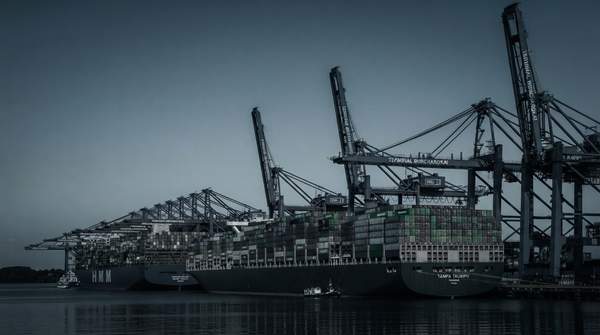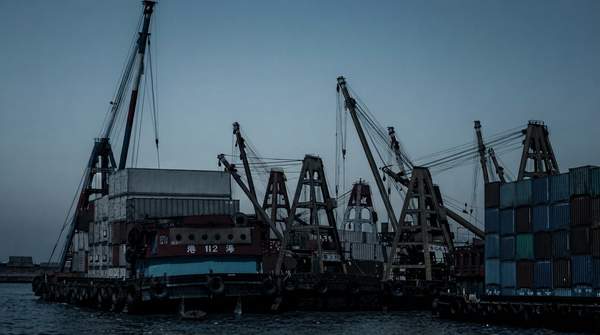
Confronted with rising geopolitical risk, most firms are not pulling production home. Evidence from Japanese multinationals shows that globalization is being "rewired" rather than reversed: companies are building multi-node regional networks while keeping existing operations intact. For supply chain managers, the practical choice is not resilience versus cost, but which mix of strategies — diversification, inventory optimization, and agility with visibility — best fits their organization's risk exposure and cost tolerance.
The Evolving Landscape of Geopolitical Supply Chain Risk
Traditional supply chain risk management was built around natural disasters and short-term volatility. Geopolitical disruption is different: it is persistent, politically motivated, and can strike at any node in a sourcing network simultaneously. That shift explains why resilience — not raw efficiency — has become a boardroom concern, and why consulting guidance from BRG describes organizations redesigning supply chains specifically to reduce geopolitical exposure and shorten the distance between suppliers and customers.
Crucially, there is no single playbook. Research by Morris Cohen and co-authors published in MIT Sloan Management Review, drawing on their study of affected businesses, finds that "companies may approach the same risks in different ways" and that "there is no single solution or guaranteed outcome." BRG's analysis adds a cautionary note for managers tempted by simple fixes: "more diversification does not equate to less risk." What follows is a portfolio of options, not a ranking, because the right mix depends on each firm's exposure, products, and cost position.
Strategy 1: Supply Chain Diversification and Regionalization
Diversification is the most evidence-supported firm-level response to geopolitical risk. Research on Japanese multinationals — published as a VoxEU column by CEPR and based on a 2025 discussion paper from the Research Institute of Economy, Trade and Industry (RIETI) — finds that firms exposed to geopolitical risk through imports and foreign direct investment become significantly more likely to diversify their supply chains. The study's key finding: when geopolitical risk rises, "diversification – not relocation – often becomes the optimal response."
The theory behind this behavior, the RIETI-based research explains, is that firms weigh relocation costs against "the insurance value of avoiding disruption" and productivity differences across locations. Because wholesale relocation sacrifices the productivity and scale of established sites, full relocation is rare in the data — even when firms close Chinese affiliates and open ASEAN facilities, complete exits remain the exception.
In practice, diversification takes recognizable forms. BRG identifies three: nearshoring (moving manufacturing or sourcing closer to end markets), friendshoring (moving it to countries viewed as reliable geopolitical partners), and reshoring (returning it to the home country). The dominant pattern, the CEPR column notes, is the "China plus one" approach — firms maintain operations in China while building parallel capacity elsewhere. Seerist's risk management guidance frames the operational core of the strategy: reduce dependence on single points of failure by conducting regular supplier risk assessments and identifying alternative suppliers across different regions.
Strategy 2: Optimized Inventory Management
Inventory strategy is where the cost-resilience trade-off is most direct. BRG observes that the just-in-time model that dominated supply chain management for decades is "under increasing pressure," as persistent geopolitical disruption makes minimal-buffer approaches harder to defend. The implied shift — toward carrying more stock for critical inputs — buys continuity, but it is not free: higher inventory means higher holding costs, tied-up working capital, and more warehouse capacity.
Seerist frames the decision explicitly: "Optimizing inventory management is an exercise in balancing cost efficiency with resilience." Its phrasing of the choice is pointed — does an organization invest in creating a "just-in-case" contingency plan, or does it "be in a reactive state and hope they are able to create a mitigation strategy 'just-in-time'?" The answer depends on the product. High-margin, disruption-sensitive goods justify heavier buffers; low-margin commodities may not, which is why inventory optimization, per the evidence, is a deliberate exercise rather than a blanket recommendation to stockpile everything.
Strategy 3: Building Agility and End-to-End Visibility
The third strategy is capability rather than structure: knowing where your risks are, and adapting quickly when they materialize. The MIT Sloan-based research found that the businesses studied "have one practice in common": they have, or strive to have, end-to-end visibility into their supply chains, prioritizing understanding of "the contributions of and the risks to their suppliers and customers at every level." The authors acknowledge the limits — visibility is incomplete below top-tier suppliers — but the firms studied work to "create new options to enable flexibility" and then adapt their procurement networks as needed.
BRG describes the enabling investments: technology providing deeper insight into suppliers, logistics networks, and inventory levels, with greater visibility helping organizations "identify risks earlier, respond more quickly to disruptions, and demonstrate compliance." Its analysis notes industry leaders are investing in AI, automation, analytics, and new operating models. Agility and visibility cost less than relocating a factory or doubling inventory, but they do not remove risk — they shorten reaction time, which makes them a complement to the first two strategies rather than a substitute.
Decision Framework: Navigating Geopolitical Supply Chain Strategies
Each strategy occupies a different position on the cost-efficiency-to-resilience spectrum, and each carries a distinct operational implication. The matrix below classifies the three approaches along that spectrum, using the definitions and trade-offs established in the evidence: diversification balances relocation cost against insurance value, inventory optimization trades holding cost for continuity, and agility/visibility invests in detection and response speed.
| Strategic approach | Primary goal | Key trade-off (cost vs. resilience) | Operational implication |
|---|---|---|---|
| Supply chain diversification | Reduce dependence on single points of failure by spreading sourcing across multiple locations | Relocation and parallel-capacity costs weighed against the insurance value of avoiding disruption; full relocation rarely wins | Build multi-node regional networks — typically "China plus one" — via nearshoring, friendshoring, and multi-sourcing supported by regular supplier risk assessments |
| Optimized inventory management | Ensure business continuity during disruptions rather than reacting "just-in-time" | Higher holding costs and tied-up capital in exchange for security of supply | Shift selectively from strict just-in-time toward "just-in-case" buffers for disruption-critical inputs |
| Building agility and visibility | Identify risks earlier and adapt procurement networks quickly | Technology and data investment in exchange for faster detection and response — but not risk elimination | Invest in end-to-end visibility, AI, analytics, and supplier insight; accept incomplete visibility below top-tier suppliers and adapt as information improves |
The framework clarifies the underlying choice: a firm prioritizing cost-efficiency accepts higher exposure and leans on visibility to react; a firm prioritizing resilience pays for buffers and parallel capacity proactively. Because the evidence shows diversification dominates relocation and BRG cautions that diversification alone does not eliminate risk, most organizations will find the optimal answer is a portfolio — visibility to detect, inventory to absorb short shocks, and diversified regional networks to withstand prolonged ones.
Strategic Imperatives for Resilient Supply Chains
Supply chain managers should prioritize a portfolio of strategies, including diversification, optimized inventory, and enhanced agility/visibility, tailored to their specific risk exposure and desired balance of cost and resilience. The evidence supports a clear logic for sequencing: map exposure through visibility first, since the MIT Sloan-based research shows that understanding supplier and customer risk at every level is the common practice of firms that manage these risks well; then deploy inventory buffers where disruption costs clearly exceed holding costs; and pursue diversification — multi-node regional networks rather than wholesale reshoring — where single-source dependence is highest.
The success measure to track is a measurable reduction in the frequency or impact of geopolitical disruptions on supply chain operations, coupled with an assessment of the associated operational costs. A firm cannot claim resilience from strategy documents alone; it can claim it only when disruptions occur and operations continue — and when the ledger shows the resilience premium paid was justified by the impact avoided.